
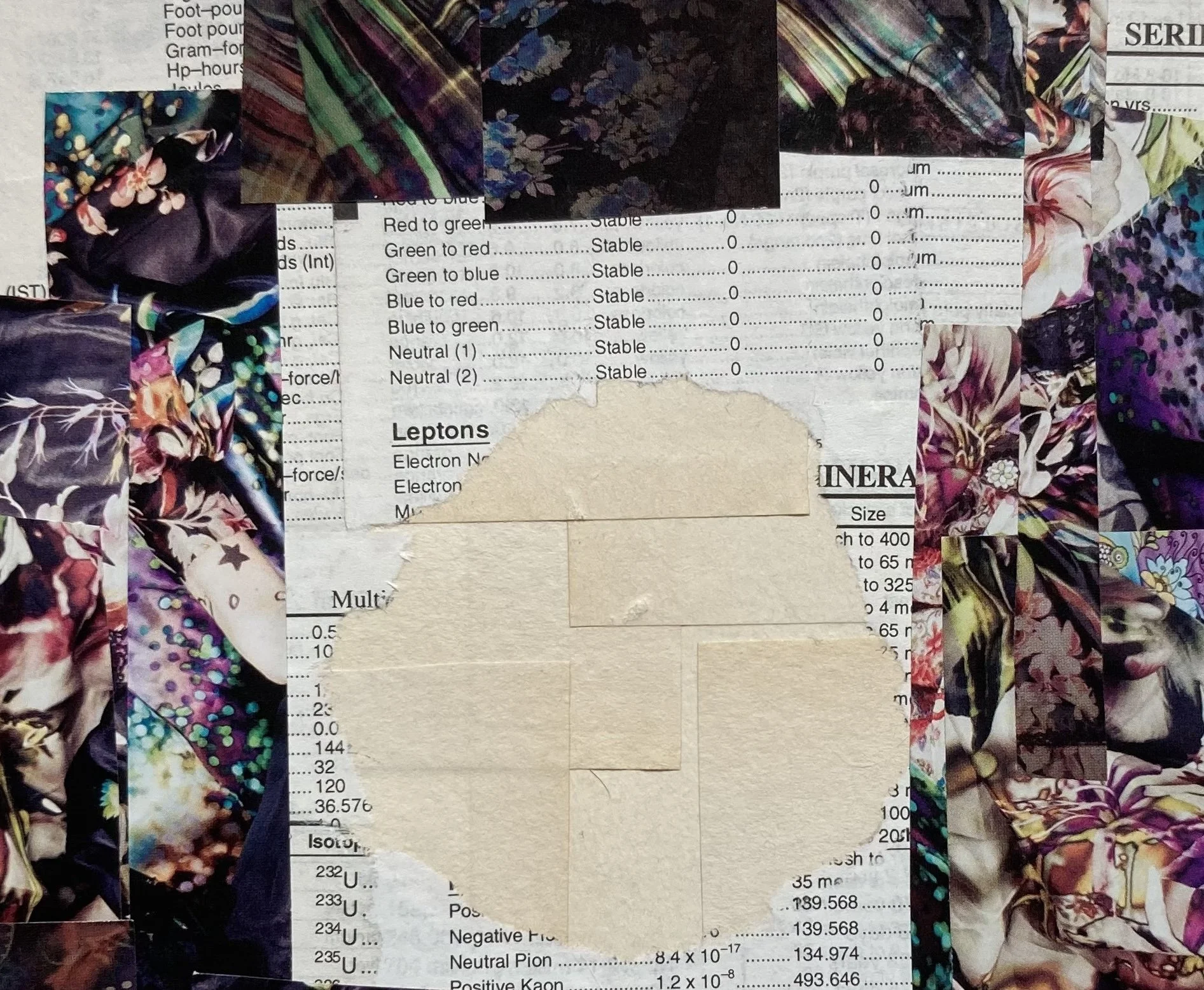
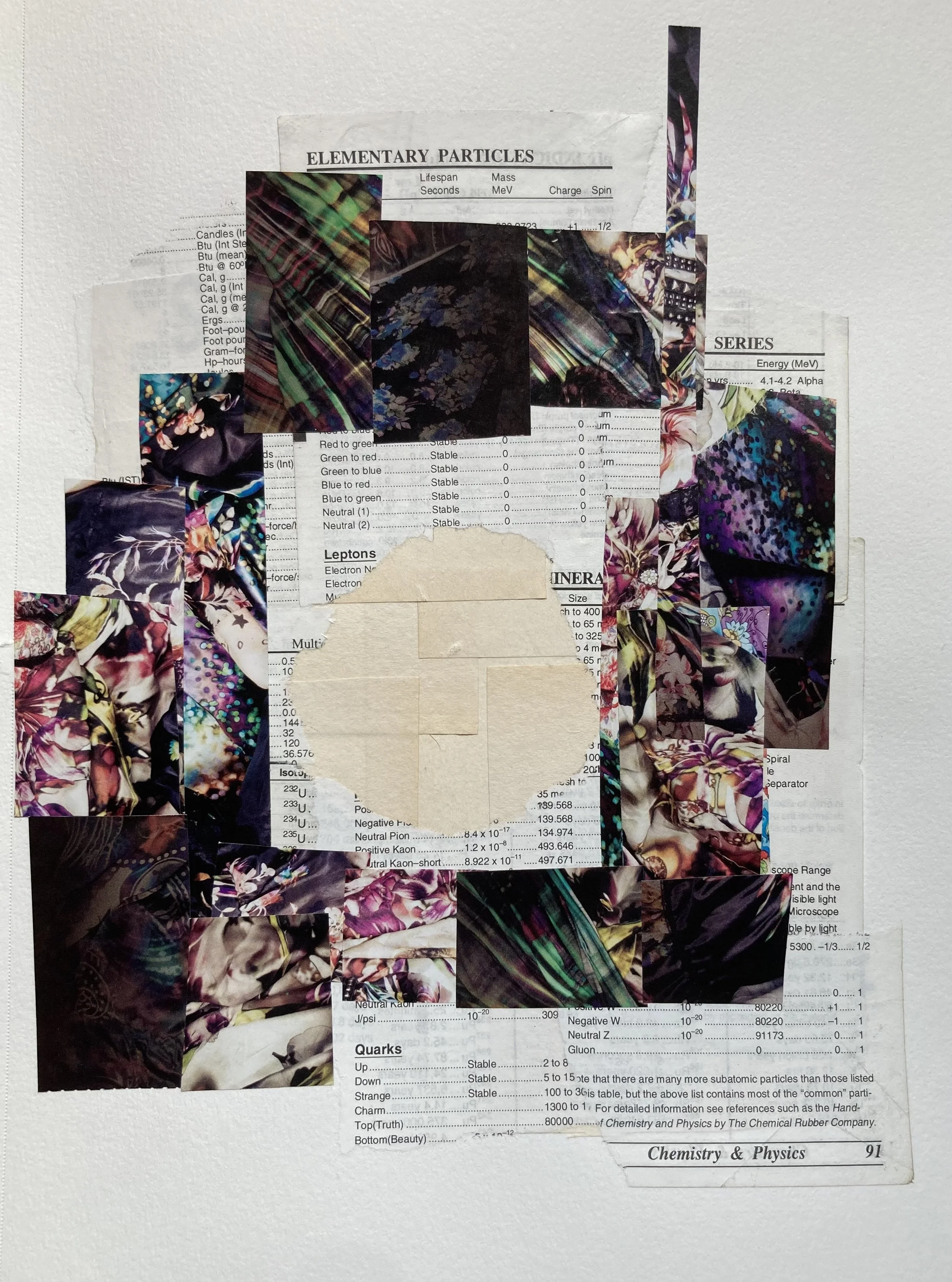
IFS Art: The Center Space
In this IFS art piece, the space where knowledge from parts emerges is represented.
My parts don’t usually show up as images. I am on the aphantasic spectrum, which means my mind doesn’t easily generate images. I can call some up with effort, and sometimes memories show up as snapshots. But when I read, I don’t see the setting or the characters in my mind’s eye.
So often when I am inside checking out who’s present, I have the experience of being in a black box theater with a single light in the middle of the stage. Information from my parts emerges into this center area, in ideas or words. My own IFS coach once referred to it as my parts sending emails with signatures, which was a good description.
So I started making art about this absence of imagery that is my experience of my parts in my IFS coaching sessions. In this piece, the overlapping edges in that center area come from the corners of a book; the words are there, waiting in the wings. There is richness, both visual and conceptual, framing this space, as all my parts have depth and nuance even when they are unseen.
The Basics of Internal Family Systems
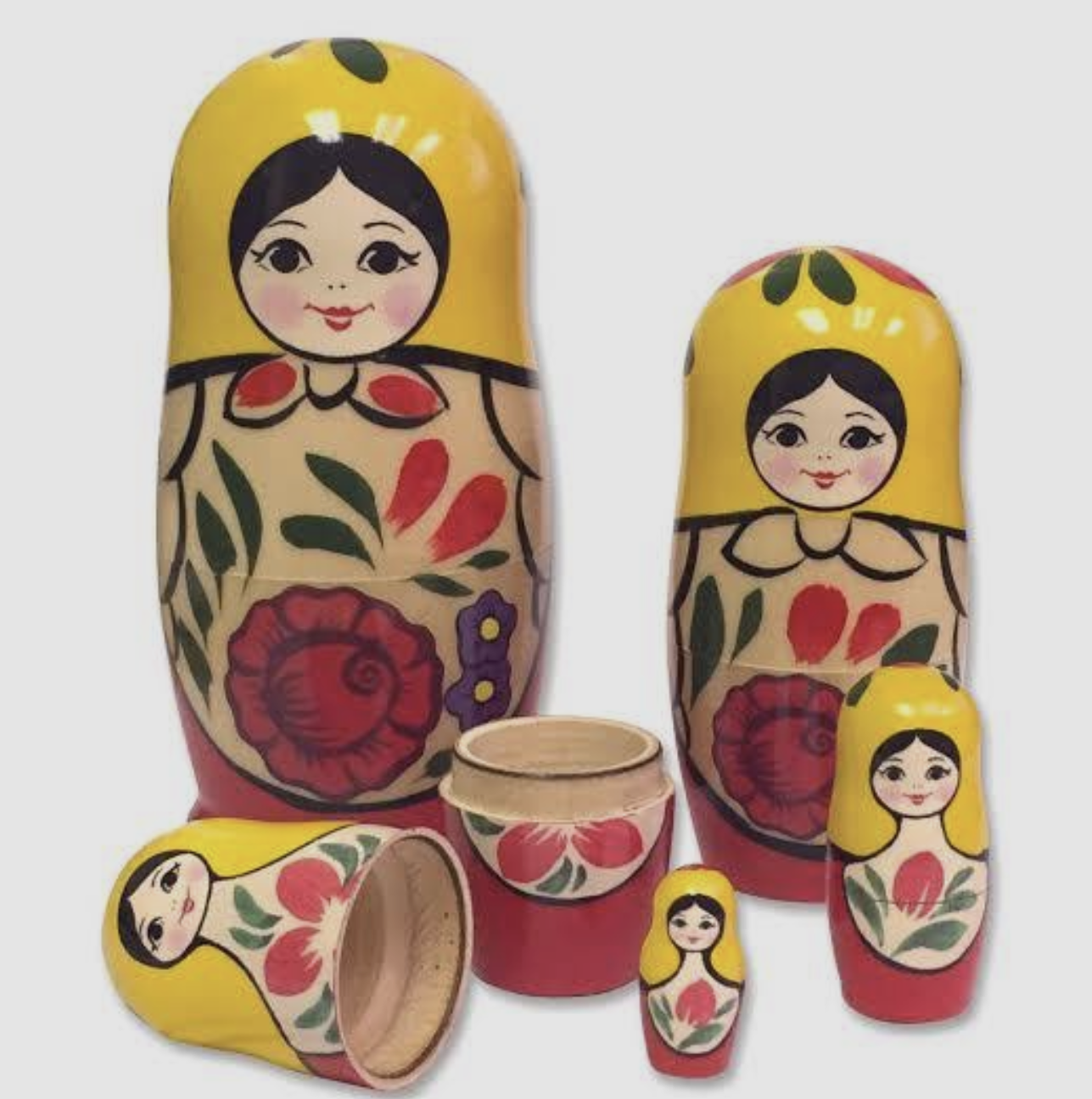
Internal Family Systems (IFS) believes that we all contain a mixture of feelings, beliefs, and behavioral strategies, held by what IFS calls parts. Different parts help us accomplish different things in our daily lives. Well-being arises when we build caring relationships with our parts and help them become a collective.
The IFS model draws from a couple of different theoretical foundations.
One is systems theory. The founder of IFS was a family therapist when he developed the model. In family therapy, no one can be treated in isolation. The whole system is composed of members with different roles, all working together to maintain homeostasis. Challenges with an individual are challenges in the system. Similarly, in IFS, no part is a “problem.” Our parts exist in a web of internal relationships with other parts who all have roles in the present state of affairs.
Another is multiplicity of the mind: a person’s psyche is composed of distinct parts. This idea is found in psychoanalysis, with the concept of id, ego, and superego, as well as in other schools of psychological thought. Various models, including IFS, consider it normal for people to contain subpersonalities that represent different aspects of a complex whole.
Parts in IFS
In IFS, there are two main types of parts, protectors and exiles. Then there are two sub-types of protectors: managers and firefighters.
Managers are good at planning, directing the action, getting us from point A to point B, and keeping us secure. They’re also good at criticizing, suppressing, demanding perfection, controlling, and shaming. Managers are generally proactive.
Firefighters are good at rushing in to save the day by distracting from or soothing distress. They often do this through what can become compulsive behaviors. Using substances or eating more than you want to, doomscrolling, shopping to financial burden, and self-harming are all firefighter behaviors. Firefighters are more reactive in their strategies.
Managers and firefighters do what they do partly to protect us from the overwhelming pain, intense emotions, or perceived danger held by exiles.
Exiles are the parts of us, often young, who carry “burdens” from trauma or deeply wounding in the form of terror, hopelessness, shame, feeling unlovable, beliefs like “not good enough,” and more. These parts are kept isolated from our daily awareness through the actions of protective parts so that we don’t become overwhelmed by their big feelings or memories.
Protectors can also have burdens. The difference is that protectors’ burdens fuel some of their actions, while the entire job of exiles is to hold pain. They are kept trapped by our protective systems, and when unburdened get to have some agency in how they participate in the inner world.
Self in IFS
Self is a tricky concept. The IFS Institute describes self as a “different level of entity than the parts—often in the center of the ‘you’ that the parts are talking to.”
A lot of parts work teaching leans into the idea of self as soul or spirit. Not everyone is spiritual enough to connect with the idea of self as spirit, and that’s fine. I’m not. I think of self as the seat of consciousness, the place from which I notice my existence and its goings-on.
Self is thought to have specific qualities, which are grouped into eight C words and five P words.
The Cs: compassion, creativity, curiosity, confidence, courage, calm, connectedness, clarity.
The Ps: presence, persistence, perspective, playfulness, patience.
When we find this type of energy, we are touching into a source of care for all our parts that will help our systems move in the direction of healing. These C and P qualities of self are laid out in the original model, but self-energy can show up in a lot of ways. I’ve heard people experience justice-seeking, free wildness, and deep contentment as self energy too.
The key is to figure out how to be attentive to your own well-being. You’ll then sense how your system is organized around the goal of showing up internally and externally in the most centered and resourced way possible.
An important note about “self”: plurals/multiples may have no “self” at all. Internal Family Systems can be quite helpful or quite harmful for this community, depending partly on how much an IFS practitioner demands that a client adhere to this framing of having a “self.” I certainly don’t.
Goals of IFS Coaching
Turning inward to explore and embrace your full psyche is a nothing less than paradigm shift in how you move through the world. Rather than thinking of some of your qualities as “bad” and others “good,” you will understand how every part of you is trying to help you thrive.
This deeper self-awareness means you can accept yourself as you are instead of striving for impossible ideals. When you understand why you do the things you do, rather than disavowing some behaviors, you’ll be able to act with more thought and intention. It becomes possible to align your choices with your deepest values. And listening to all your parts will help you develop a strong internal compass.
Through parts work, you grow your capacity to be with your own pain in a compassionate way, rather than judging or beating yourself up when things feel hard. One aspect of IFS is unburdening your pain—releasing the beliefs or feelings you hold from past wounding that interfere with your well-being.
And it’s not only pain you’ll be able to sit with. IFS helps you be more present for all your experiences, including happiness. Sometimes it’s scary to focus too much on what’s going well. We manage our expectations by downplaying the good so as not to be disappointed when it ends. But life is full of both pleasure and pain, and reveling in our joy when it happens helps us persist through the rest.
Curious if IFS coaching is for you? Check out my main coaching page to learn more or send me a message for a free consultation.
Common Types of Managers in IFS
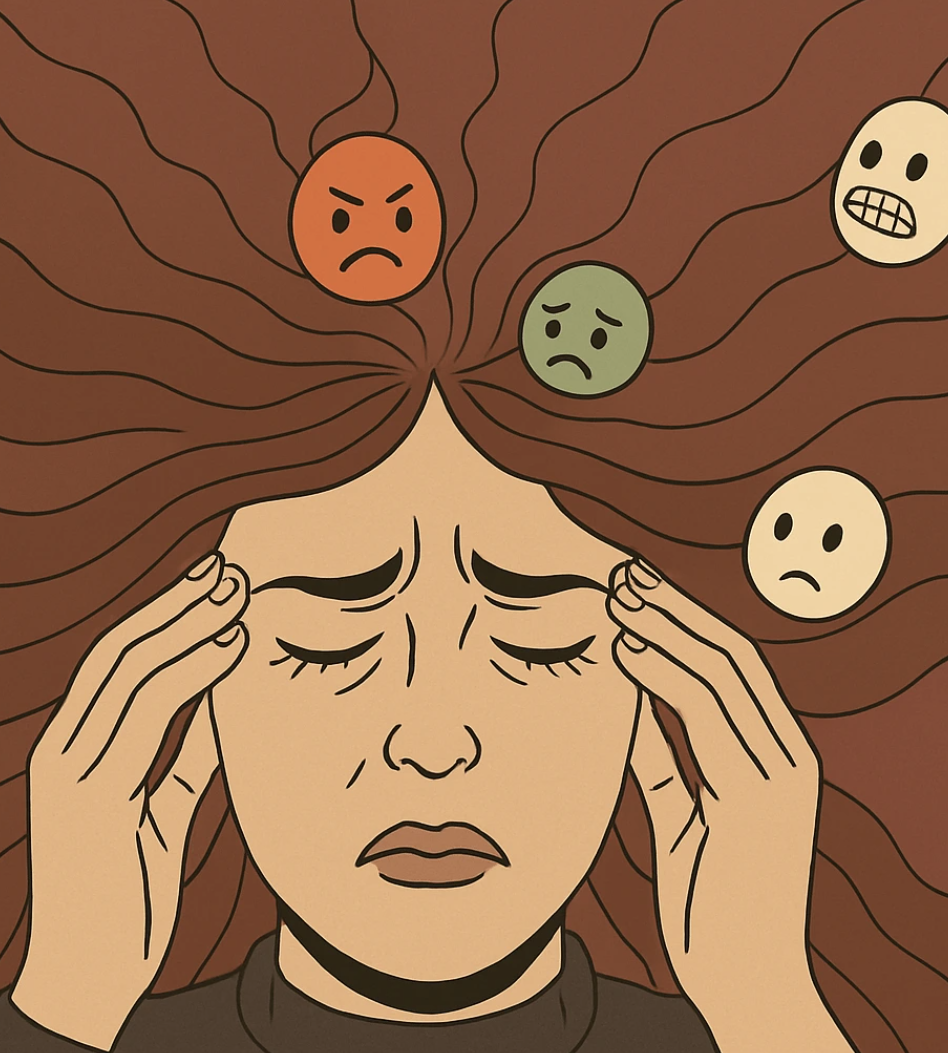
Managers are the parts in our systems who get us through the day to day. They help us at our jobs, in our social connections, with our to-do lists, and in our decision-making. While our managers are vital in these roles, when they get too extreme they also cause internal and interpersonal distress.
Quick review: managers are one type of protective part that keep us from feeling the intolerable pain of exiles. They do this proactively, striving to prevent that pain from appearing in the first place. (Firefighters, the other type of protective part, are more reactive and jump in when the pain does appear.)
Manager thoughts and actions often seem like personality traits, because they’ve been around so long and are so active. But learning to see them as parts with specific roles frees you to interact with their strategies rather than feeling stuck. I often use the phrase “who’s driving the bus?” to find out which part is in charge of your thinking, feeling, and action at any given moment.
Here are some common manager parts who might show up in your daily life.
Perfectionists
These folks hold us to impossible standards. If you’re perfect, no one can criticize, shame, or reject you, right? That’s what this part thinks.
While perfectionists can motivate excellence, they also set unrealistic standards, and they don’t tolerate mistakes. Mistakes are human; we all make them. So when perfectionist parts are too rigid, we end up feeling like we’re failing or defective.
Perfectionist parts driving the bus can lead to procrastination, stress, and burnout.
Critics
Critics often present as “tough love” voices or judges who point out your flaws.
Unlike with perfectionists, it might be hard to see any value in our critic parts. But even this harsh voice wants you to do your best. If you get to a problem first and solve it internally, then no one else has the chance to criticize.
The critic is afraid of failure or the humiliation that can come with others witnessing your flaws. When critics are highly active, guilt, exhaustion, anxiety, or depression result.
Caretakers
Caretakers put others’ needs first. These parts can show up in our romantic relationships, family ties, and friendships—anywhere in our lives. Caretaker parts bring wonderful empathy and altruism to the people around us. They also give us a way to ignore our own pain.
Relying on caretaking parts is a way of maintaining attachment, avoiding conflict, or making yourself indispensable. In doing so, you neglect your own needs, which can lead to resentment, anger, and burnout.
Sometimes people whose caretaker parts are worn out but can’t step down start doing what I call keeping a balance sheet: a record of who’s done what for whom, who is owed emotional support, a favor, and so on. And this isn’t the way to share connection.
Worriers
Anxious parts scan our environment for potential threats to keep us safe. If you can see something bad coming, you can mobilize to take action to prevent, or at least prepare for, a distaster—according to these parts, at least.
While keeping an eye out for situations that might need to be managed is a helpful skill, when worriers are driving the bus they might imagine catastrophes everywhere. They also can’t distinguish between a true disaster and something stressful that you nevertheless have the coping skills to handle.
The strong presence of worrier parts causes chronic nervous system activation, exhaustion, and fearfulness.
So what do we do with these parts?
Managers often project success while being deeply exhausted under the surface. And they are successful, in the sense that they protect you from intense pain. But the longer they do that, the more rigid they become, and the more exhausted you become. Ultimately, you’ll need to connect with your own suffering so those managers can relax.
To help managers take a break from their extreme roles, listen with care, affirm their good intentions, and introduce them to the idea that you can help. Often managers don’t immediately trust our most resourced, grounded selves to lead the way, so this work is all about building relationships at their pace.
When you are ready to metabolize the pain—shame, fear, helplessness, or worthlessness, for instance—you’ve been holding, and your managers trust that you can, they’ll step down. Then it’s time to bring all your compassion and clarity to those young, hurt parts. Once their pain is released, your managers will be able to go about their roles in a calmer, more sustainable way.
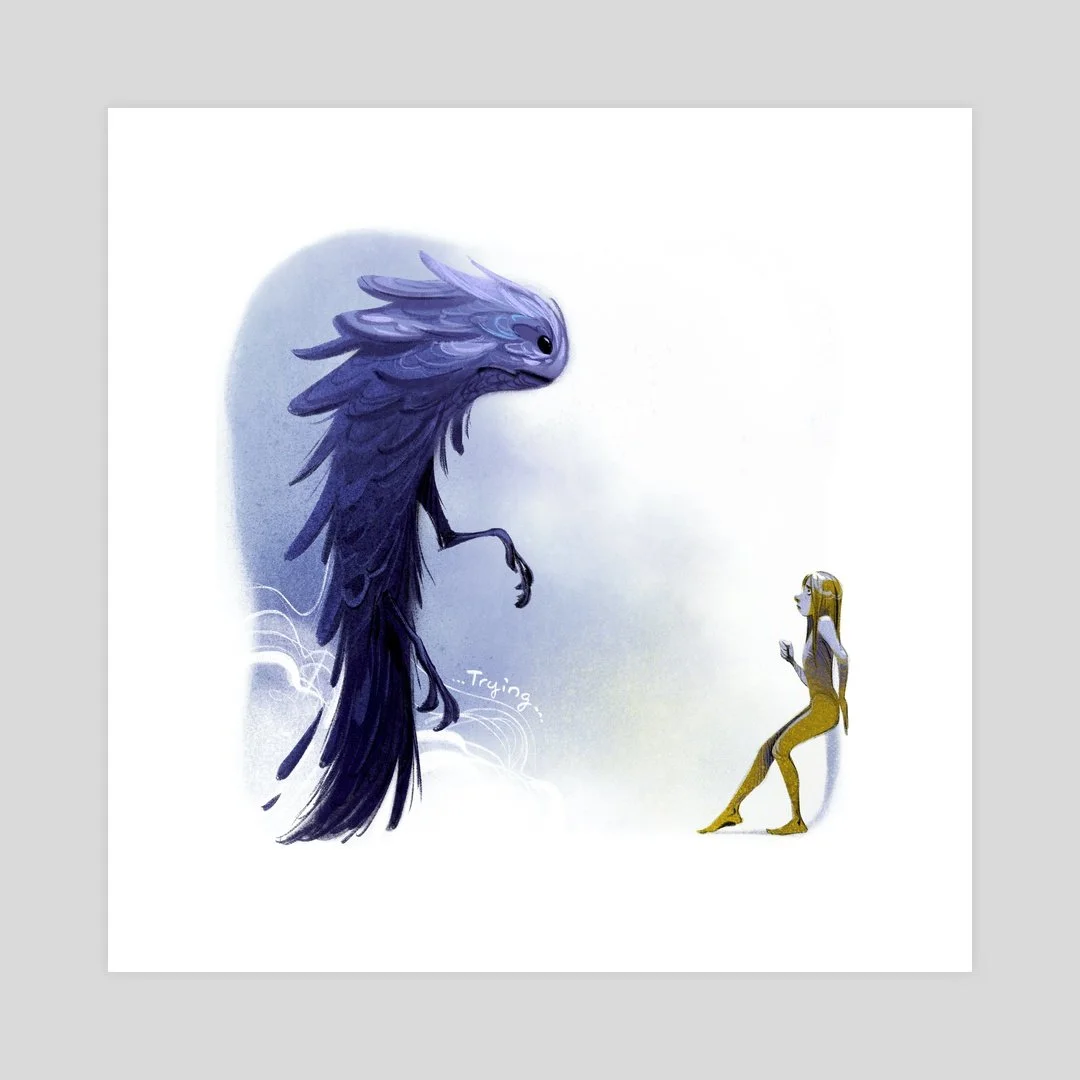
IFS Art: Embracing Fear
This series called “About Fear” perfectly captures the Internal Family Systems process of turning to face something scary in our systems and witnessing it transform.
My favorite office art is a series of prints by artist Cécile Carre. Over the course of six images, she portrays, in her words: “Everyday trying to watch and embrace my fear until it disappears completely.”
I don’t think she meant to create an art piece that so perfectly captures the Internal Family Systems process, but she did. In the first panel, fear is a large, looming monster reaching out for a cowering figure. Over the course of the series, the figure bravely stands up and turns to face her fear. As she does this, fear is gently revealed to be the emotion of a young part. Once held with care, her fear disappears.
Here is the series:
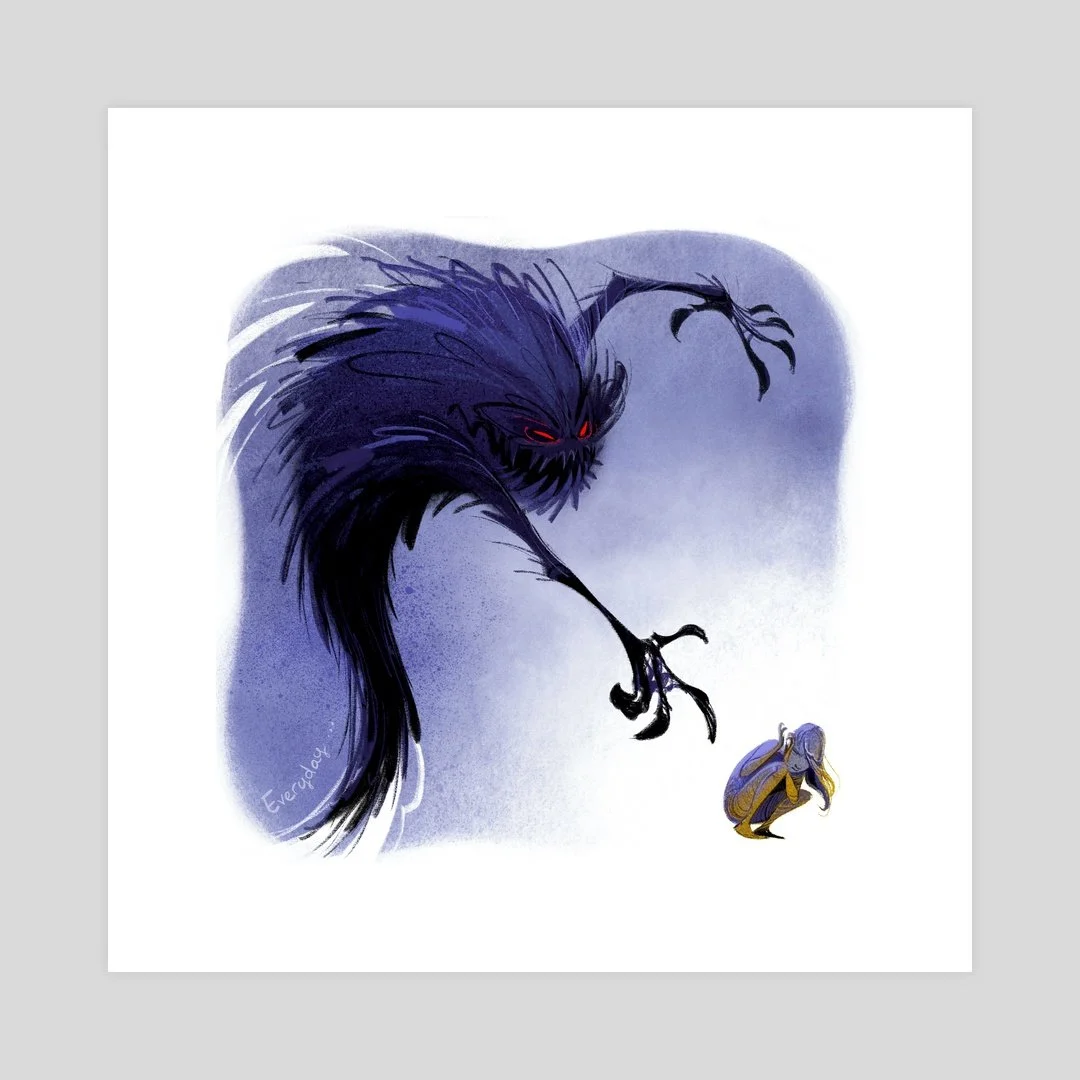
The first of six prints in the About Fear series: “Everyday …”
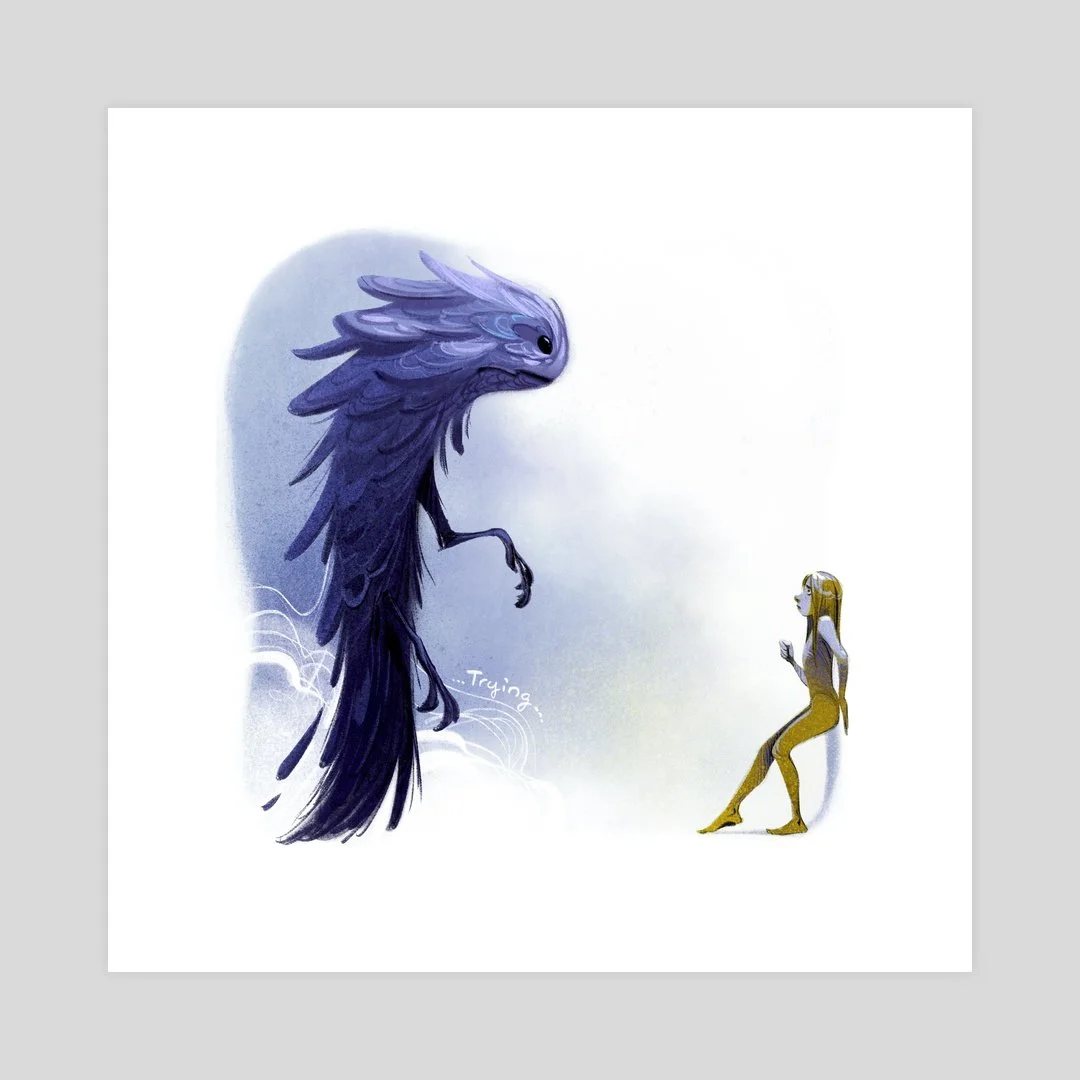
The second of six prints in the About Fear series: “Trying …”

The third of six prints in the About Fear series: “to watch …”
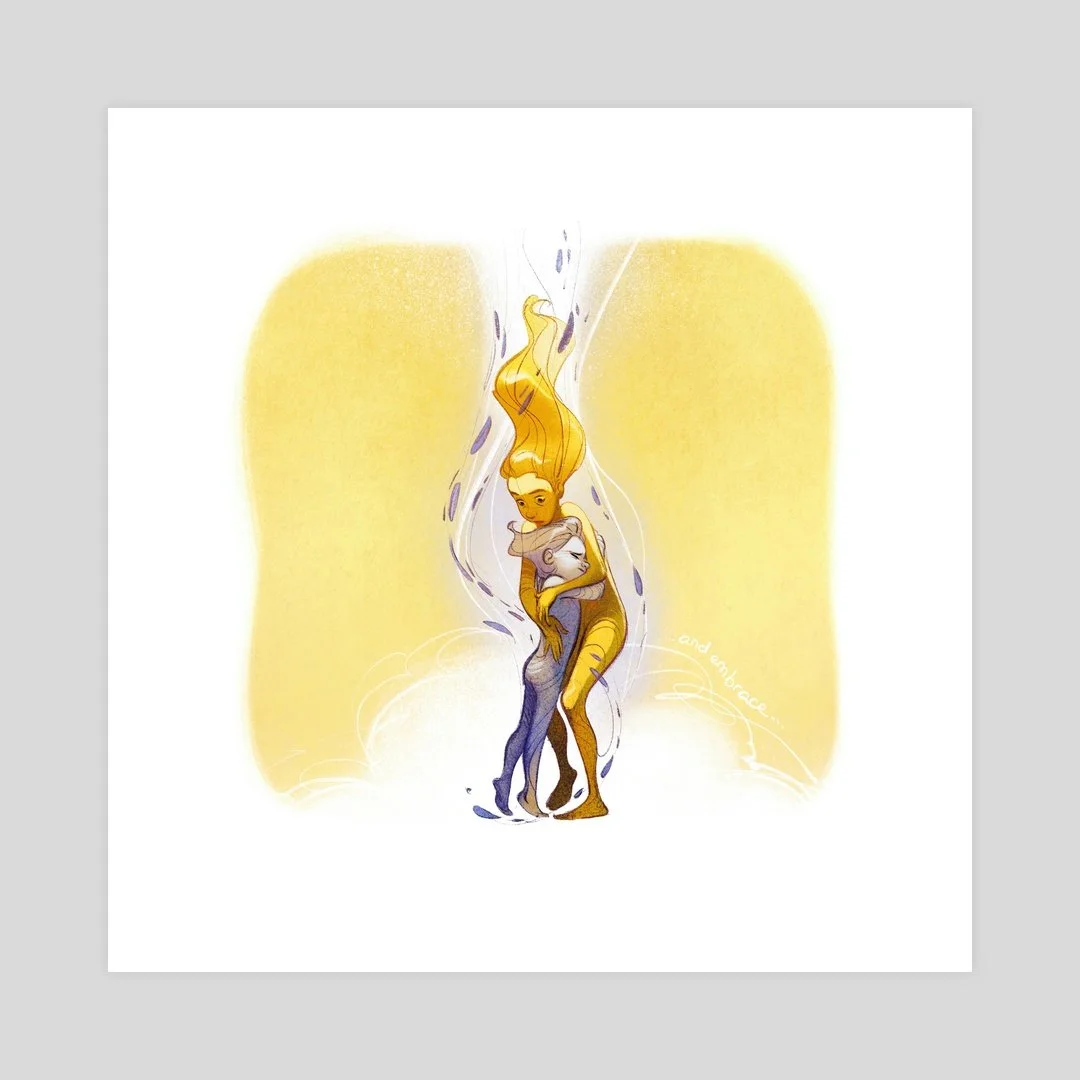
The fourth of six prints in the About Fear series: “and embrace …”
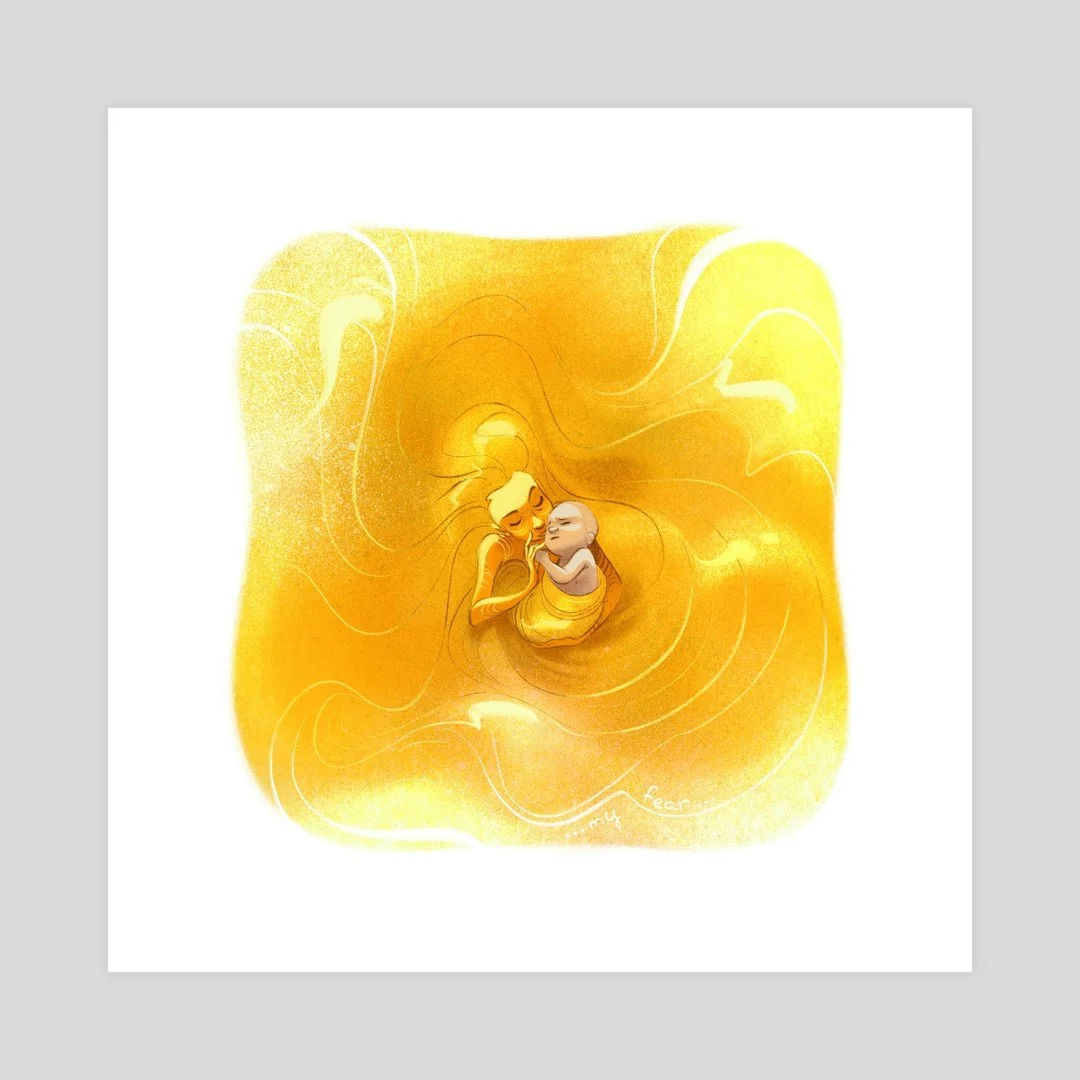
The fifth of six prints in the About Fear series: “my fear …”

The last of six prints in the About Fear series: “until it disappears completely.”
The prints are available for purchase on INPRNT.